Sugar, Sugary
Book / Produced by partner of TOW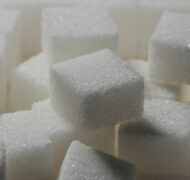
Sugar consumption in North America is continually on the rise. We eat more than one hundred pounds annually, and most of us are not even aware of it. No one can escape sugar. It’s in vitamins, peanut butter, canned vegetables, medications and even toothpaste. Soft drinks contain several teaspoons of sugar, and dry tonic water can have up to eighteen teaspoons. And of course we routinely add sugar to tea and coffee.
Sweet is good, but sweeter is better. And we do whatever we can to make our food “better.” We take already naturally sweet fruit and bake it in pies, adding twelve to fourteen teaspoons of sugar. We dip fresh apples in caramel, camouflaging their already sweet flavor. To cakes, in which sugar is the main ingredient, we add frosting. And we delight in topping ice cream, already laden with sugar, with hot fudge, caramel or other syrups. Our snacks revolve around sugar and its quick highs.
Sugar and Health
Natural sugar, like honey, was made by God and does provide instant nourishment, as Jonathan experienced in 1 Samuel 14:24-30. But too much sugar can be dangerous. The pancreas, which regulates blood sugar by releasing insulin, can respond to a sudden surge of sugar with too much insulin. Hence, artificial sweeteners such as saccharine, cyclamate and the currently popular aspartame (marketed as NutraSweet) have been developed.
Sugar is the only food that can be directly absorbed into the bloodstream. Other foods, such as starch, must be broken down into sugar before the body can use them, and this involves time. Sweets shortcut the natural protection God designed in the human body. Earl Mindell observes that excessive sugar consumption has several potential negative side effects: tooth decay, obesity, aggravation of asthma, mental illness and other nervous disorders, changes in mood and personality, increased risk of heart disease, diabetes, hypertension, gallstones, back problems, arthritis, hypoglycemia and high blood pressure. The loss of necessary nutrients leads to an imbalance in the calcium-phosphorus ratio (Mindell, pp. 101-2).
Most commonly, sugar consumption robs people of healthy appetites. There are many children, junior couch potatoes, who avoid healthy foods and gorge on sweets. The overconsumption of sugar in children is promoted in Halloween trick-or-treating where children are actually encouraged to go from house to house gathering large bags full of candy. Candy, as most mothers will tell you, has a hyperactive effect on children.
For some people sugar is an addiction. The first taste of sugar functions much like that first sip of alcohol. The person becomes out of control and is in a rage to find more sugar, even if that person has already eaten a filling and nutritious meal. Like alcohol, sugar can cause a surge of emotion and can make people feel both energetic and sleepy (Cauwels, p. 168). Quick highs are followed by deeper lows, and sugar addiction enslaves people in a ludicrous rut. An overdose of sugar hocks the body, and the pancreas tries to compensate by producing more insulin. The sugar is then lost to the bloodstream, and the person is left less energetic, less alert, and more hungry and irritable than before. The quick high is a downer in disguise.
Sugar and Partying
Sugar is often the most important ingredient in a social occasion. The sweeter the celebration, the sweeter the dessert menu. Cakes, candies and cookies are prominent on the dessert menu at birthdays, weddings and anniversaries. The more important the occasion, the greater the effort to present sugar in an elaborate and stylish fashion. Inhibitions are lowered, and celebrants encourage one another to “sin boldly” and diet tomorrow. Further, participation in these sugar orgies is cross-generational; adults and children are allowed dispensations from normal dietary patterns.
As important as sugar is in celebrations, it is even more important when people find themselves in distress. Chocolate is the preferred antidepressant of millions of people. And although sugar may temporarily relieve pain, the subsequent low is even more devastating. Meanwhile, a permanent addiction to sugar takes hold.
Pain in all its forms is sugarcoated. We greet one another with the sugary “I’m fine, how are you?” We avoid people who do not present the appropriate sugary façade and who are genuine and natural in their responses to both the joys and the sorrows of life. It is all but impossible to share our painful experiences with sugar people. Instead, the painful aspects of life belong to the realm of the therapist, away from everyday interactions. And beyond being avoided, the nonsugarcoated message and the message bearer are devalued.
Collectively, sugarcoating values results in a culture of thick denial which leads to various addictions. In fact our body is not created to deny pain. Pain increases when it is repressed. Pain leads to healing when it is shared. Facing pain makes human beings real, creating authentic family and community relationships.
Sugar and Sex Stereotypes
Unhealthy and unfortunate stereotypes revolve around sugar. “Sugar and spice and everything nice—that’s what little girls are made of.” And those little girls grow up to be women suffering from the “nice lady” syndrome. When a woman deviates from this norm, she is labeled as aggressive and masculine; her sexual identity becomes an issue. Boys meanwhile are allowed to play more aggressively and even violently with toy guns, pretend warfare and real wrestling matches and fistfights. Men are not required to be nice. When they are violent, women are still supposed to be nice to them.
The nature and conditions of human life are anything but sweet. The cultural and theological stereotypes which push women to conform to the image of sweetness are in conflict with wholeness. Many women live with a false self-concept; an outer presentation of sweetness covers the internal bleeding and psychic numbness. Women are continuously tempted to abandon authenticity for social acceptance. Unless a woman has the courage to defy negative labels, her physical, emotional and spiritual homeostasis is at risk.
As opposed to the passivity and powerlessness of sugar niceness for women, sexual and economic power is the hallmark of the sugar daddy. The sugar daddy considers himself to be honorable, not deviant. In reality he leads a double life, victimizing two women, his wife and his mistress (Nelson, pp. 43-68). Many patriarchal societies justify male extramarital relationships while censuring female extramarital relationships—the old double standard.
Sugar imagery highlights the inequality in gender relationships. The resulting hypocrisy and denial diminish authentic relationships between men and women. Superficiality and pseudocommunity, rather than intimacy and authentic community, prevail. Meanwhile, both women and men are hungry for whole and wholesome relationships.
Sugar and Power
Most sugar consumers have no clue about the political, economic and cultural exploitations in the process of sugar production. Exploitation of labor on the sugar plantation under colonialism and capitalism have had huge social ramifications (Schwartz, p. 313). The history of the sugar plantation is one wrought with inequality and coercive labor.
A pitfall in postindustrial society is the way we compartmentalize in the name of professionalism. One hand does not know what the other hand is doing. We sprinkle the snow-white, sparkling sugar on our favorite desserts, but we do not witness the sweaty hands and feet of laborers who make our sweet tooths possible. We are disconnected from what we consume and how it is produced. The vicious cycle of injustice continues while we are preoccupied with our sugary lifestyles, which temporarily numb and deny the violence and pain in daily life.
This problem of denial originated with Adam and Eve, who first collaborated in the original sin and then sought to hide behind fig leaves. Such “sugar-coating” of sin produced a vicious cycle of denial throughout history in which powerful people continually deny the evils of violence and injustice they have woven into the social fabric.
Sugar and the Church
In the sugary church, our sugar-oriented culture colludes with a triumphalist theology to prevent meaningful exchanges. People who come to church in search of healing are driven into denial or hiding. While bleeding internally and starving for authenticity, they experience only a pseudocommunity. Like artificial sweeteners, pseudocommunity is full of artificiality. People do not feel free to speak the truth. That would be offensive. Conversation is superficial. Relationships are based on pretense and mirror the sugar effect of a quick high followed by emptiness. People leave the sugary church empty and starved for authenticity and transformation.
Sugar and Healing
Systems theory has closed some of the gaps between Western and non-Western ways of thinking by moving toward a more holistic paradigm that sees the natural and the spiritual worlds as deeply intertwined. In many non-Western cultures, bitter herbs are highly valued for their healing properties. The healing process begins with the person who prepares the bitter herb: one has to be virtuous and has to choose the right pot to boil herbs at the right temperature for the right time. These “bitter-herb cultures” accept suffering and pain as a natural part of life and consider them character-building opportunities, as Romans 5:3-4 indicates: “We also rejoice in our sufferings, because we know that suffering produces perseverance; perseverance, character; and character, hope.”
As the Israelites journeyed to the Promised Land, they were commanded to eat a meal which included bitter herbs (Exodus 12:8). The Passover meal portrays life as a journey, and the bitter herbs signify the necessary suffering that takes place on this journey. In the desert, there is no place for the luxury of sugar. There is no sugarcoating, no frostinglike coverup, no sugar substitute. There is no denial, only dealing with reality. In the most ordinary of human activities, in eating, the providence of God shines through.
The Bible clearly indicates that the road toward healing involves brokenness. Jesus demonstrated this at the cross, and we remember this in another sugarless meal, the Eucharist. In breaking the bread and drinking the cup, the people of God are reminded of and participate in the obedience of Jesus to the will of God, his drinking of the bitter cup.
Bitter herbs and painful stories belong in the church. When the silence is broken and even the most shameful of stories are told, people are connected with the sacred. Even the most painful story turns into a sacred story. The bitter truth, like the bitter herb, is painful. Yet it leads to healing. In contrast to sweet sugarcoated talk, the identification of the community with the suffering of the individual leads to an authentic spiritual expression and real intimacy. As the suffering of Jesus at Gethsemane demonstrates, pain has within it the power of transformation if one is willing to confront it and break the silence.
References and Resources
J. M. Cauwels, Bulimia: The Binge-Purge Compulsion (New York: Doubleday, 1983); E. Mindell, Unsafe at Any Meal (New York: Warner Books, 1987); E. D. Nelson, “Sugar Daddies:`Keeping’ a Mistress and the Gentlemen’s Code,” Quantitative Sociology 16 (Spring 1993) 43-68; S. B. Schwartz, Sugar Plantations in the Formation of Brazilian Society (Cambridge: Cambridbe University Press, 1985).
—Young Lee Hertig






The authors Robert Banks and R. Paul Stevens have partnered with The Theology of Work Project to offer The Complete Book of Everyday Christianity in its entirety here. All rights reserved.
This resource was originally published in 1997, and the text has not been updated.